
Gond Resistance Movement
- Gond Resistance Movement
Historical Context
Marri Kamayya lived during a period of significant change in tribal regions, when expanding colonial administration began imposing forest regulations, taxation systems, and centralized control over indigenous territories. These policies disrupted traditional Gond governance, restricted access to forest resources, and weakened long-standing community-based systems.
For generations, Gond society had functioned through self-rule, customary law, and collective land stewardship. However, external interference threatened both economic stability and cultural identity. Forests—central to livelihood, spirituality, and social organization—became sites of conflict.
Revolt Against British Rule
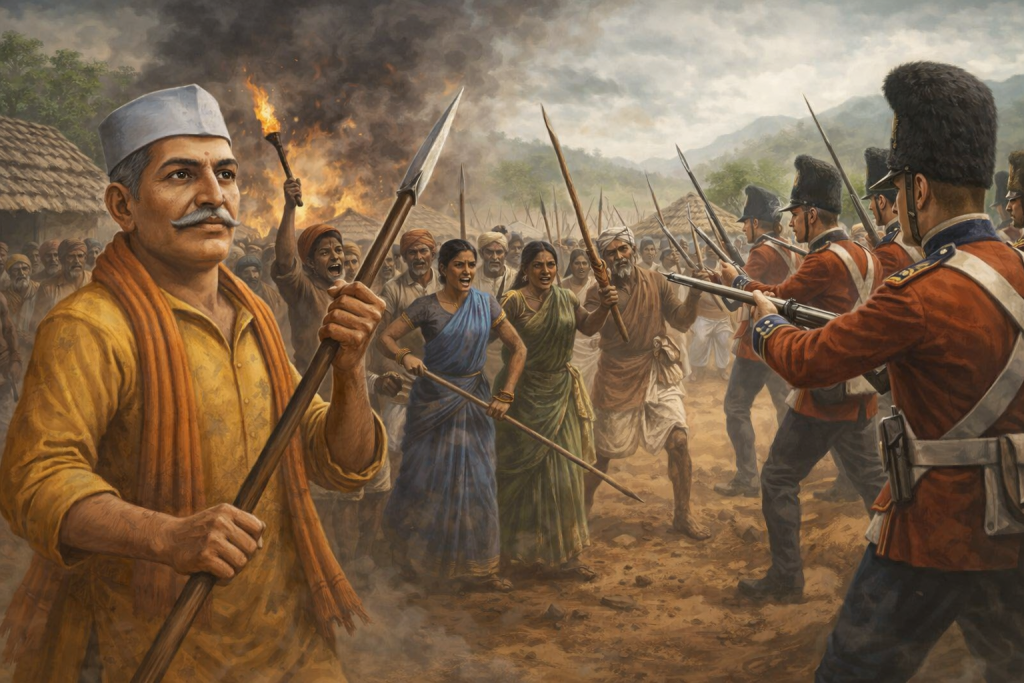
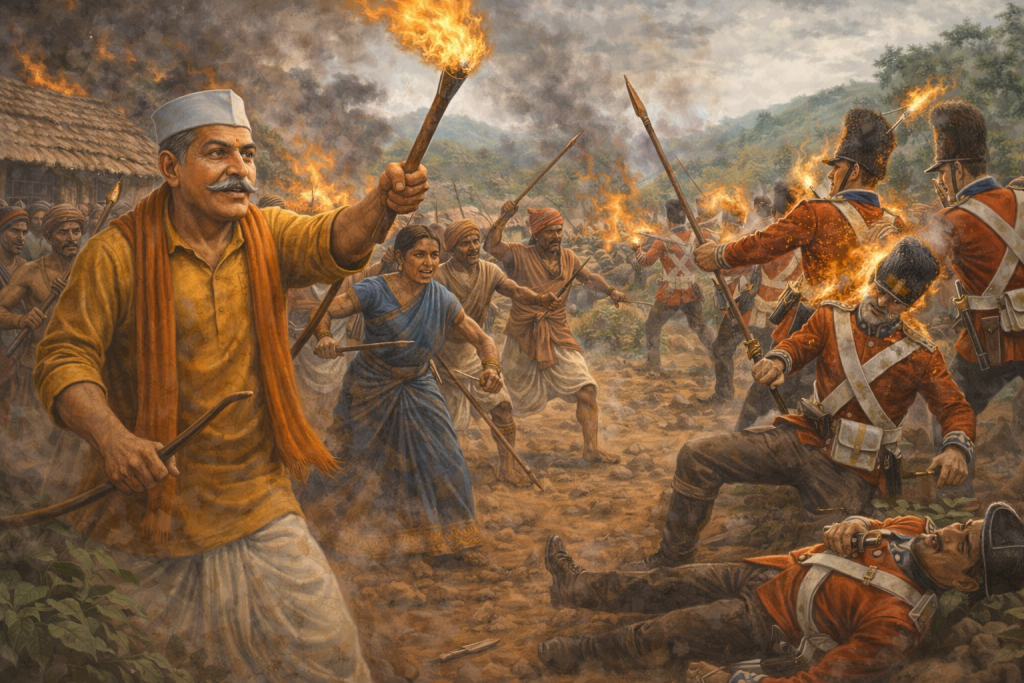
As colonial policies increasingly interfered with tribal land rights and traditional governance, Marri Kamayya became a central figure in organizing resistance against British authority. Forest restrictions, taxation measures, and administrative control disrupted the economic and cultural foundations of Gond society, creating widespread dissatisfaction among tribal communities.
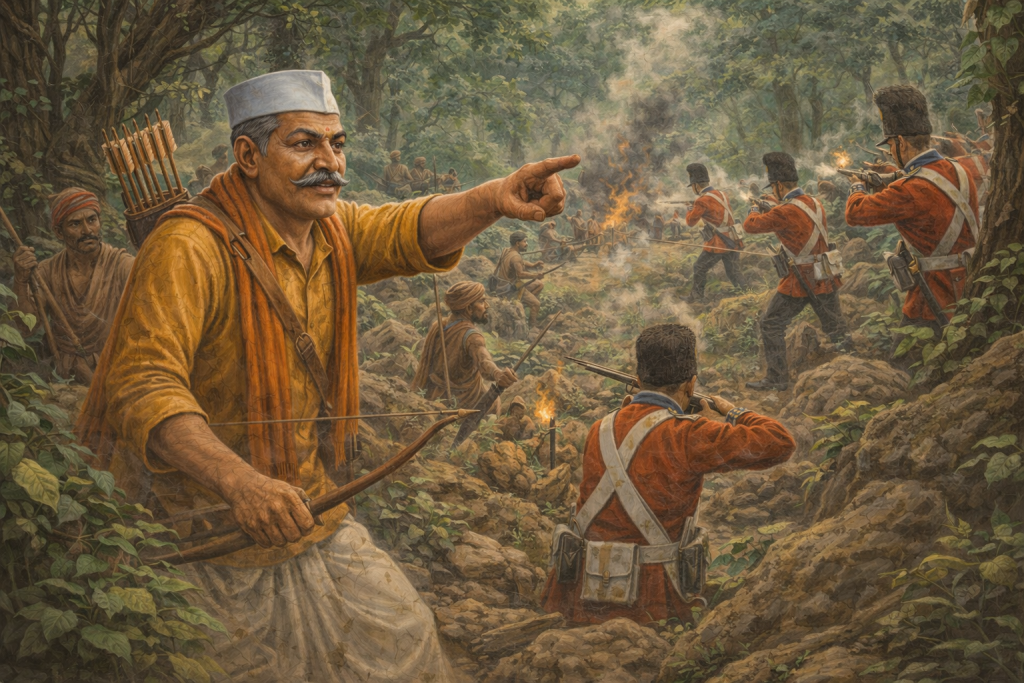
Facing a stronger and better-equipped colonial force, Marri Kamayya relied on strategic guerrilla tactics rooted in deep knowledge of forest terrain. The dense hills and wooded landscapes of Gond territory became natural allies, allowing swift movement, surprise actions, and protective concealment for tribal fighters.
Mobilization began at the village level, where clans and community leaders coordinated efforts through trusted networks. Rather than conventional battle formations, resistance relied on small, agile groups capable of rapid response and strategic withdrawal. This approach minimized direct confrontation while maximizing local advantage.
Guerrilla Warfare & Mobilization
Facing a stronger and better-equipped colonial force, Marri Kamayya relied on strategic guerrilla tactics rooted in deep knowledge of forest terrain. The dense hills and wooded landscapes of Gond territory became natural allies, allowing swift movement, surprise actions, and protective concealment for tribal fighters.age.
Mobilization began at the village level, where clans and community leaders coordinated efforts through trusted networks. Rather than conventional battle formations, resistance relied on small, agile groups capable of rapid response and strategic withdrawal. This approach minimized direct confrontation while maximizing local advant
Major Battles & Actions
Marri Kamayya was born into a Gond tribal family deeply rooted in ancestral traditions and community-based living. His upbringing reflected the collective spirit of Gond society, where elders guided social values, village councils ensured justice, and forests were regarded as sacred lifelines.
Key confrontations
01
Marri Kamayya’s leadership encouraged scattered Gond villages to unite under a shared purpose. His efforts laid the foundation for coordinated resistance, strengthening collective action across the region.
Key confrontations
02
Marri Kamayya’s leadership encouraged scattered Gond villages to unite under a shared purpose. His efforts laid the foundation for coordinated resistance, strengthening collective action across the region.