Leadership
- Leadership
Tribal Governance & Justice System
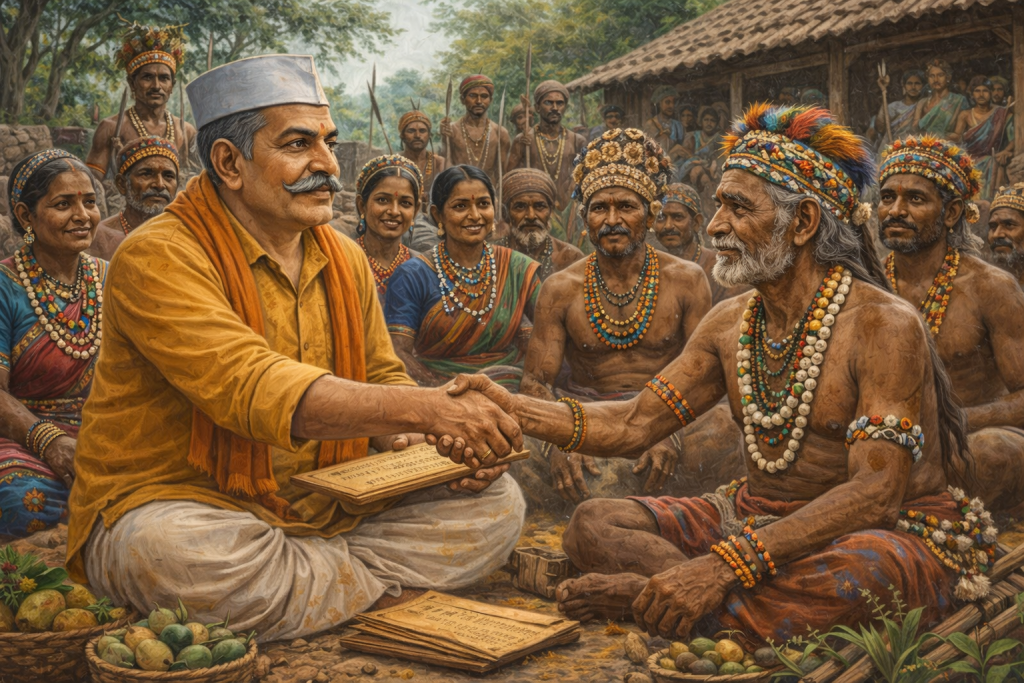
Marri Kamayya upheld and strengthened the traditional Gond system of tribal governance during a period of colonial disruption. Village councils, guided by elders and clan leaders, formed the foundation of decision-making, dispute resolution, and community welfare. Justice was collective rather than punitive, emphasizing reconciliation, social harmony, and respect for ancestral customs. Kamayya supported this indigenous structure, ensuring that local laws and customary practices remained intact despite external interference. By defending traditional authority and community-based justice, he reinforced the Gond principle of self-rule and protected the moral and cultural framework that sustained tribal identity and unity.
Collective Decision-Making
Traditional Gond society followed a collective decision-making system where important matters were discussed openly within the community. Elders, clan representatives, and respected leaders participated in reaching consensus, ensuring that decisions reflected shared values and collective welfare.
Customary Law & Justice
The Gond justice system was rooted in customary practices passed down through generations. Disputes related to land, marriage, or community conduct were resolved through dialogue, restitution, and reconciliation rather than punitive measures.
Freedom Philosophy & Resistance Ideals
Assertion of Self-Rule
Marri Kamayya strongly upheld the principle that Gond communities had the right to govern themselves according to their own customs and traditions.
Protection of Tribal Autonomy
By preserving traditional laws, rituals, and land rights, Marri Kamayya ensured that the Gond community retained control over its identity, resources, and future.
Shared Duty
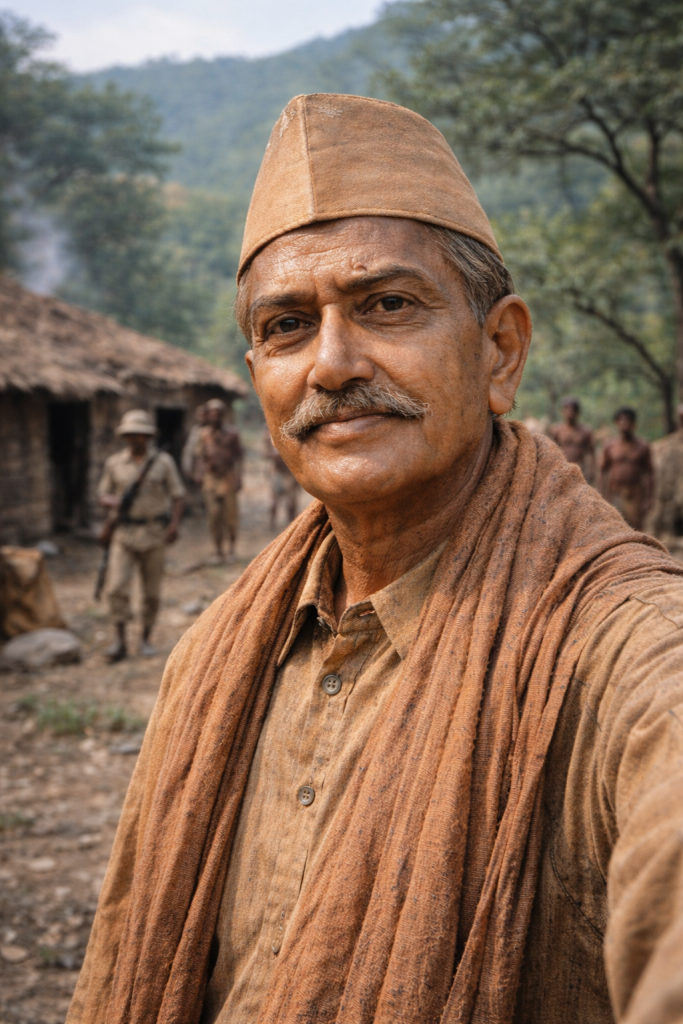
In Gond society, responsibility was shared among all members of the village. Marri Kamayya encouraged collective participation in protecting forests, fields, and sacred spaces.
Unity in Decision and Action
Collective responsibility meant that decisions were made through consultation and action was taken together.
Protection of Gond Customs & Identity
Marri Kamayya understood that resistance was not only about defending land, but also about preserving the cultural soul of the Gond community. During a time of external interference and administrative control, he worked to safeguard traditional rituals, clan systems, and village-based governance practices.He encouraged the continuation of festivals, oral storytelling, and customary laws that defined Gond identity. By reinforcing respect for elders, sacred forests, and ancestral traditions, he ensured that cultural practices remained intact despite growing outside pressures.Through his leadership, the protection of Gond customs became inseparable from the struggle for autonomy. His efforts strengthened cultural pride and reinforced the belief that identity, heritage, and self-rule were deeply interconnected.
Relationship with Gond Community
Marri Kamayya maintained a deep and personal connection with the Gond community he led. His leadership was rooted not in authority alone, but in trust, shared experience, and mutual respect. He lived among his people, understood their struggles, and stood beside them during times of hardship.
He regularly consulted village elders and clan representatives before making important decisions, ensuring that leadership remained collective and inclusive. This approach strengthened unity and reinforced the traditional values of shared responsibility and cooperation within Gond society.